

This post is also available in:
 Español
🎮 Gana +10 OTAKU COINS leyendo
Misión opcional · +10 OC · una vez por artículo
Registrarse Iniciar sesión¿Cómo funciona?
Es opcional. Al participar se activa el progreso de lectura y un checkpoint sorpresa. Si no participas, sigue leyendo normalmente.
🌸 Explore all our content
Anime, manga, gaming, otaku news and much more ♡
Some anime become timeless classics. Others become unforgettable snapshots of the era that created them. And then there is Girls Bravo, a 2000s anime packed with absurd comedy, supernatural romance, exaggerated fanservice, and enough chaotic situations to make you wonder how anyone in this story manages to have a normal day.
Originally adapted from the manga by Mario Kaneda, Girls Bravo is a romantic comedy and ecchi anime that follows Yukinari Sasaki, a young man who suffers from an unusual condition: he develops an allergic reaction whenever he comes into contact with women. His life takes an unexpected turn when he encounters Miharu Sena Kanaka, a mysterious girl from another world who somehow doesn’t trigger his allergy.
What follows is a parade of romantic misunderstandings, eccentric characters, supernatural elements, and plenty of fanservice that helped define a particular corner of anime culture during the 2000s.
But does Girls Bravo still hold up in 2026? Is it an underrated ecchi anime worth revisiting, or is it a product of its time that modern viewers might struggle to enjoy?
Let’s take a closer look at its story, characters, humor, animation, strengths, weaknesses, and lasting appeal.

What Is Girls Bravo About?
Girls Bravo follows Yukinari Sasaki, a high school student whose allergy to women makes ordinary social interactions extremely uncomfortable. Whenever a woman touches him, his skin can break out in an irritating rash. Unsurprisingly, this condition complicates his relationships and makes romantic situations particularly difficult.
Everything changes when Yukinari discovers a mysterious connection to Seiren, a world inhabited by unusual beings and filled with supernatural possibilities. There, he meets Miharu Sena Kanaka, a cheerful girl whose presence doesn’t provoke his allergy.
Miharu eventually arrives in Yukinari’s world, turning his already complicated life into a never-ending series of chaotic encounters. As more girls enter the picture, romantic rivalries, misunderstandings, supernatural abilities, and increasingly ridiculous situations become the foundation of the series.
The premise is simple, but it gives the anime a convenient excuse to explore its favorite ingredients: harem comedy, exaggerated reactions, romantic tension, and ecchi situations.
The result is not a particularly complex narrative. Instead, Girls Bravo prioritizes episodic entertainment, using its supernatural premise to create comedic scenarios and keep its growing cast of characters in constant conflict.
If you’re looking for a tightly written fantasy story with elaborate worldbuilding and carefully developed relationships, this probably isn’t the anime for you. However, if you enjoy chaotic romantic comedies from the early 2000s, the premise offers exactly the kind of ridiculous setup the series wants to deliver.
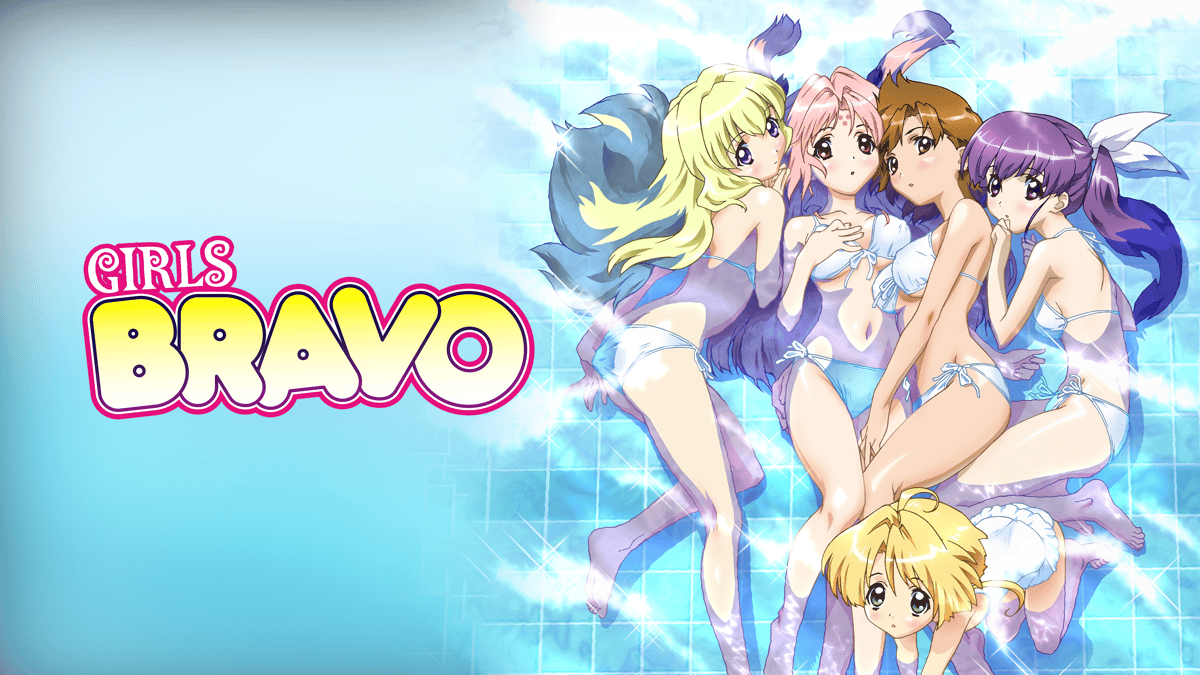
The Characters: A Chaotic Harem With Different Personalities
One of the most recognizable features of Girls Bravo is its ensemble cast. The story gradually introduces several girls and supporting characters, each contributing to the romantic confusion and comedic disasters surrounding Yukinari.
Yukinari Sasaki: The Unusual Protagonist
Yukinari’s allergy to women is the central gimmick of the series. It creates an immediate obstacle for a protagonist who finds himself surrounded by romantic possibilities he isn’t always equipped to handle.
The concept can generate funny situations, especially when the characters misunderstand one another or when Yukinari’s condition makes an already awkward encounter even worse.
However, the joke can become repetitive. Because so many situations revolve around his allergy and the resulting misunderstandings, the character’s development sometimes takes a back seat to the series’ recurring comedic formula.
Yukinari works best when the show embraces the absurdity of his circumstances rather than expecting the audience to take his romantic struggles too seriously.
Miharu Sena Kanaka: The Heart of the Story
Miharu is one of the most important characters in Girls Bravo. Her cheerful personality, innocence, enormous appetite, and connection to Seiren help establish the series’ lighter and more fantastical side.
Her relationship with Yukinari is the foundation of the central romantic premise. Since she doesn’t trigger his allergy, she represents a possibility that previously seemed impossible for him.
Miharu also helps introduce viewers to the supernatural elements of the story. Her arrival connects the everyday setting with the strange world beyond it, giving the anime more to work with than a conventional school harem comedy.
Her innocence can be endearing, although it also contributes to situations in which the humor depends on misunderstandings and exaggerated reactions.
Kirie Kojima: The Aggressive Friend
Kirie, Yukinari’s childhood friend, brings a very different energy to the cast. Her impulsive behavior, physical strength, and forceful personality make her a natural source of conflict and comedy.
She also adds tension to the romantic dynamics. Rather than allowing the story to settle into a straightforward relationship between Yukinari and Miharu, Kirie helps keep the emotional situation messy.
Her personality is a good example of the show’s tendency to build humor around exaggerated character traits. That approach can be entertaining, but it can also make certain interactions feel predictable after a while.

The Supporting Cast
Characters such as Koyomi Hare Nanaka, Tomoka Lana Jude, Lisa Fukuyama, and Kazuharu Fukuyama expand the series’ collection of rivalries, supernatural complications, eccentric personalities, and romantic misunderstandings.
Kazuharu, in particular, represents the more exaggerated side of the show’s humor, with his wealth, eccentric behavior, and obsession with Kirie frequently pushing situations into ridiculous territory.
The large cast gives Girls Bravo plenty of opportunities for different comedic combinations. Unfortunately, not every character receives the same level of development, and some exist primarily to trigger another gag, rivalry, or fanservice scene.
Character verdict: The cast is colorful and memorable, but the writing often favors exaggerated personalities and recurring jokes over substantial character growth.
Ecchi and Fanservice: The Anime Knows Exactly What It Is
Let’s address the elephant in the room. Or, considering this particular anime, perhaps the enormous anime-style proportions occupying half the screen.
Girls Bravo is unapologetically an ecchi anime. Fanservice isn’t an occasional ingredient added to an otherwise conventional romantic comedy. It is one of the series’ main selling points.
Suggestive situations, revealing outfits, accidental encounters, exaggerated anatomy, and sexualized comedy appear throughout the show. The series frequently uses these elements to create awkward scenarios, provoke reactions from the characters, and push its comedy toward the outrageous.
For viewers who enjoy classic harem anime and the exaggerated fanservice associated with the era, this is likely to be part of the appeal.
For everyone else, it can become exhausting.
The biggest problem is not simply that the anime includes ecchi content. It is that the fanservice sometimes overwhelms the story, interrupts character interactions, or replaces opportunities for more inventive comedy.
There are moments when the series seems more interested in getting another reaction from its audience than in developing the situation that led to the joke.
That makes Girls Bravo a very specific recommendation. Its ecchi content is central to its identity, and viewers should know that before starting the series.
If you’re searching for a romance anime with subtle chemistry and restrained humor, look elsewhere. If you want a loud, exaggerated harem comedy that embraces the conventions of its period, Girls Bravo delivers precisely that experience.
Comedy: Absurd, Silly, and Sometimes Repetitive
The comedy in Girls Bravo depends heavily on misunderstandings, exaggerated reactions, awkward romantic encounters, and characters behaving in increasingly unreasonable ways.
At its best, the series understands that its premise is ridiculous and commits to the joke. Yukinari’s unusual condition creates opportunities for chaotic interactions, while the supernatural setting allows the story to move beyond ordinary school-life situations.
The supporting cast also helps keep the atmosphere energetic. With so many different personalities competing for attention, even a relatively simple scenario can spiral into something absurd.
However, the humor doesn’t always land.
Some jokes are repeated so frequently that they lose their impact. Certain characters are defined by a small collection of traits, and the series often returns to the same types of misunderstandings instead of finding new ways to surprise the audience.
The ecchi comedy can also overshadow other forms of humor that might have given the anime more variety.
What do you think? Share your own rating, experience or point of view in the comments.
Ultimately, the series is at its most enjoyable when you accept that subtlety isn’t its priority. Girls Bravo wants to be silly, exaggerated, and occasionally ridiculous. Whether that works for you depends on how much you enjoy that particular style of comedy.

Animation and Visual Style: A Product of the 2000s
Produced by AIC Spirits, Girls Bravo features the visual characteristics associated with many television anime from the early and mid-2000s.
The character designs emphasize recognizable silhouettes, expressive faces, and exaggerated proportions. These choices suit the show’s comedic style, especially when a scene depends on an over-the-top reaction or a dramatic change in expression.
The animation is generally functional for the type of series it is trying to be. It supports the comedy, keeps the characters recognizable, and delivers the fanservice expected from the genre.
However, viewers accustomed to modern anime productions may notice differences in presentation, compositing, and the overall polish of the visuals. The show doesn’t consistently offer the kind of elaborate animation or cinematic direction found in some contemporary productions.
That isn’t necessarily a fatal flaw. Not every comedy needs spectacular action sequences or elaborate visual effects. The real question is whether the presentation supports the experience.
For Girls Bravo, it mostly does, although the visuals aren’t the main reason to watch the series today.
Its appeal comes from its particular combination of characters, outrageous comedy, and unmistakable early-2000s atmosphere.
Story and Pacing: Entertainment Over Complexity
Across its two seasons, Girls Bravo delivers 24 episodes of romantic confusion, supernatural encounters, and ecchi comedy.
The series is more interested in creating entertaining situations than in building an intricate overarching narrative. Individual episodes frequently rely on their own comedic conflicts, while the larger premise provides a framework for bringing the characters together.
This approach makes the anime relatively easy to watch in short bursts. You don’t necessarily need to remember every detail of a complicated storyline to understand the next ridiculous situation.
The downside is that the overall experience can feel uneven. Some episodes make better use of the cast and premise than others, while recurring gags can make the pacing feel repetitive.
The supernatural elements offer opportunities to expand the story, but the comedy and fanservice remain the main attractions.
If you prefer anime with substantial plot progression, deep character arcs, and carefully developed romance, Girls Bravo may feel lightweight.
If you’re looking for something casual, nostalgic, and easy to watch when you want an uncomplicated comedy, its episodic structure can work in its favor.
Ficha técnica de Girls Bravo
🎌 GIRLS BRAVO
Anime Technical Information
A supernatural romantic comedy from the 2000s where absurd humor, romance, fantasy, and fanservice become part of the adventure.
- 🎬 Type
- TV Series
- 🏢 Studio
- AIC Spirits
- 🎥 Director
- Ei Aoki
- 📚 Original Manga
- Mario Kaneda
- 💫 Genres
- Comedy Romance Fantasy Ecchi Harem
- 🌍 Setting
- Earth and the world of Seiren
What is it about?
Yukinari Sasaki is allergic to physical contact with women.
His life changes when he meets Miharu, a girl from the mysterious
world of Seiren.
What Works and What Doesn’t?
The Good
- A memorable premise: Yukinari’s unusual allergy creates an immediate source of conflict and comedic possibilities.
- A colorful cast: The different personalities generate plenty of romantic rivalries and chaotic encounters.
- A distinctive era: The series captures a recognizable style of 2000s ecchi and harem anime.
- Unapologetically silly comedy: When the jokes land, the exaggerated situations can be genuinely entertaining.
- A nostalgic appeal: For longtime anime fans, the series can evoke a very specific period in anime fandom.
The Bad
- Repetitive jokes: The same character traits and misunderstandings can become tiresome.
- Excessive fanservice: The ecchi elements sometimes overwhelm the comedy and story.
- Limited character development: Several characters function more as comedic archetypes than fully developed personalities.
- Uneven pacing: The episodic formula doesn’t always produce consistently entertaining episodes.
- A very specific audience: Its style may not appeal to viewers who prefer more restrained humor or modern romantic storytelling.
Is Girls Bravo Worth Watching in 2026?
The answer depends on what you expect from an anime.
If you want a sophisticated romantic comedy with strong character development, nuanced relationships, and a carefully constructed story, Girls Bravo probably won’t become your new favorite.
If you enjoy ecchi anime, classic harem comedies, absurd humor, and the exaggerated storytelling conventions of the 2000s, however, it may be worth adding to your watchlist.
Modern audiences may also find some of its jokes and fanservice dated or uncomfortable. That reaction is understandable. The anime reflects conventions and entertainment trends that were more familiar in its original era, and viewers don’t have to enjoy every aspect of it simply because it is old.
At the same time, revisiting an older work can be an opportunity to understand its historical context. Recognizing how an anime reflects its time doesn’t mean excusing every creative decision or pretending that every joke has aged well.
Fiction is fiction, and fictional situations shouldn’t be treated as instructions for real-life behavior when that behavior could hurt other people. It’s possible to discuss the content critically, acknowledge its weaknesses, and still appreciate what the series represents in anime history.
That balance matters when revisiting many older anime, not just Girls Bravo.

A Personal Trip Back to the Days of DVD Anime Clubs
For me, Girls Bravo brings back memories of my secondary school years, when hormones were running at full power and ecchi anime could sell like hotcakes in the few anime shops that existed in Mexico.
Anime stores weren’t everywhere, conventions were much less common, and getting your hands on original merchandise could be difficult and expensive, especially when you were a student with a limited budget.
The internet wasn’t what it is today, either. Finding information, watching anime online, or discovering new series could be a frustrating experience. Many of us relied on friends, local stores, and whatever opportunities we had to get our hands on the next DVD.
You might save up enough money to buy one disc, watch it with friends over the weekend, and then wait until you could afford the next one. Sometimes, the best part wasn’t even the anime itself. It was gathering at someone’s house, sharing snacks, arguing about characters, and discovering a new series together.
DVD exchanges and informal anime clubs were part of that experience. We made our own little communities around the shows we loved, often without realizing that we were building memories we’d carry for years.
And Girls Bravo fits perfectly into that particular corner of nostalgia.
I remember it as a series that embraced its ecchi identity with absolutely no intention of being subtle. Calling it a festival of oversized anime proportions would hardly be an exaggeration.
Looking back, it’s easy to understand why a show like this could attract attention among young anime fans at the time. It was loud, silly, provocative, and very much a product of its era.
Would it generate controversy today? Quite possibly. Some of its humor and fanservice would invite much more discussion in the current anime community.
But nostalgia shouldn’t prevent us from examining a show’s flaws, and contemporary criticism shouldn’t automatically erase the context in which it was made.
For longtime fans, revisiting Girls Bravo can be a way to remember a period when anime fandom looked very different: fewer ways to watch, fewer places to buy merchandise, and more effort involved in sharing your favorite shows with friends.
That doesn’t automatically make the series a masterpiece. It makes it a memorable piece of a particular anime era.
And sometimes, that is reason enough to revisit an old favorite.
Final Verdict: A Classic Ecchi Comedy With Very Specific Appeal
Girls Bravo is not a masterpiece of romantic storytelling, and it doesn’t pretend to be one. Its strengths lie in its absurd premise, colorful cast, exaggerated humor, and unapologetic commitment to the conventions of early-2000s ecchi anime.
Its weaknesses are equally clear. The fanservice can become excessive, the jokes sometimes repeat themselves, and the characters don’t always receive the development they deserve.
Nevertheless, the series remains an interesting watch for anyone exploring the history of harem anime and ecchi comedy. It offers a snapshot of a style of anime that was particularly recognizable during the 2000s, along with all the strengths and shortcomings that came with it.
For me, Girls Bravo is a nostalgic little gem from a different time, especially for viewers who remember discovering anime through DVDs, friends, and the occasional convention.
It’s worth revisiting if you appreciate absurd comedy, classic harem anime, and plenty of fanservice. Just don’t expect a groundbreaking romance or a sophisticated story.
OTAKUTSUGI Rating: 7/10
Recommended for: Fans of classic ecchi anime, harem comedies, absurd humor, and 2000s anime nostalgia.
Not recommended for: Viewers who dislike heavy fanservice, repetitive jokes, or romantic comedies that prioritize exaggerated situations over character development.
So, is Girls Bravo still worth watching in 2026? If you’re curious about the ecchi anime that helped define a particular era, or simply want to revisit the kind of series you might once have watched with friends on a weekend, give it a try. You may discover an entertaining relic of anime history, even if some of its jokes have aged better than others.
Y te recordamos que nosotros somos OTAKUTSUGI, a Mexican media outlet dedicated to anime, manga, video games, VTubers, cosplay, Japanese culture, and the entire geek and otaku universe. We follow the stories making noise in Japan and across the internet. We also publish anime and video game reviews, curiosities, interviews, and content about Japanese culture, celebrating both the latest trends and the classics that helped shape generations of fans.
Available in Spanish 🇲🇽 and English 🇺🇸